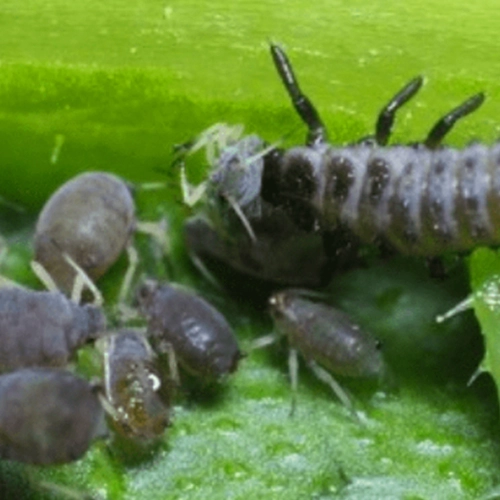
The most common species of aphids are black and green aphids, also known as blackfly and greenfly. They are usually around 4mm in length with a bulbous abdomen. Some may have wings and others are wingless.
If you see aphids with wings in spring or summer, it may be because the environment has become too crowded for them. Aphids produce offspring with wings when this happens, so they can fly off and look for a new location to feed.
Aphids have a stylus – a syringe like needle used to pierce and suck sap from the plant. They also have two tubes on their back to excrete honeydew.
Identifying Aphid Damage
You may only notice aphids once they have become a problem. This is because they reproduce extremely quickly - a single female aphid will produce up to 80 new aphids, so they can rapidly overwhelm a plant.
Aphids damage the plant by sucking sap from it. This can lead to leaf curl, discoloration, yellowing, and stunted growth. Aphids excrete a sugary liquid known as honeydew. This honeydew can make leaves sticky; you may notice leaves that look glossier than normal as a result of patches of honeydew.
This honeydew can attract black sooty mold. This mold is not a parasite, but it can stress the plant by blocking out light and preventing its ability to photosynthesise. This can stunt the plant’s growth and lead to leaf shed.
Ants ‘milk’ aphids for their honeydew, so if you notice ants running up and down the trunks, branches and stems of your plants, you may well have aphids somewhere on that plant.
What is Biological Aphid Control
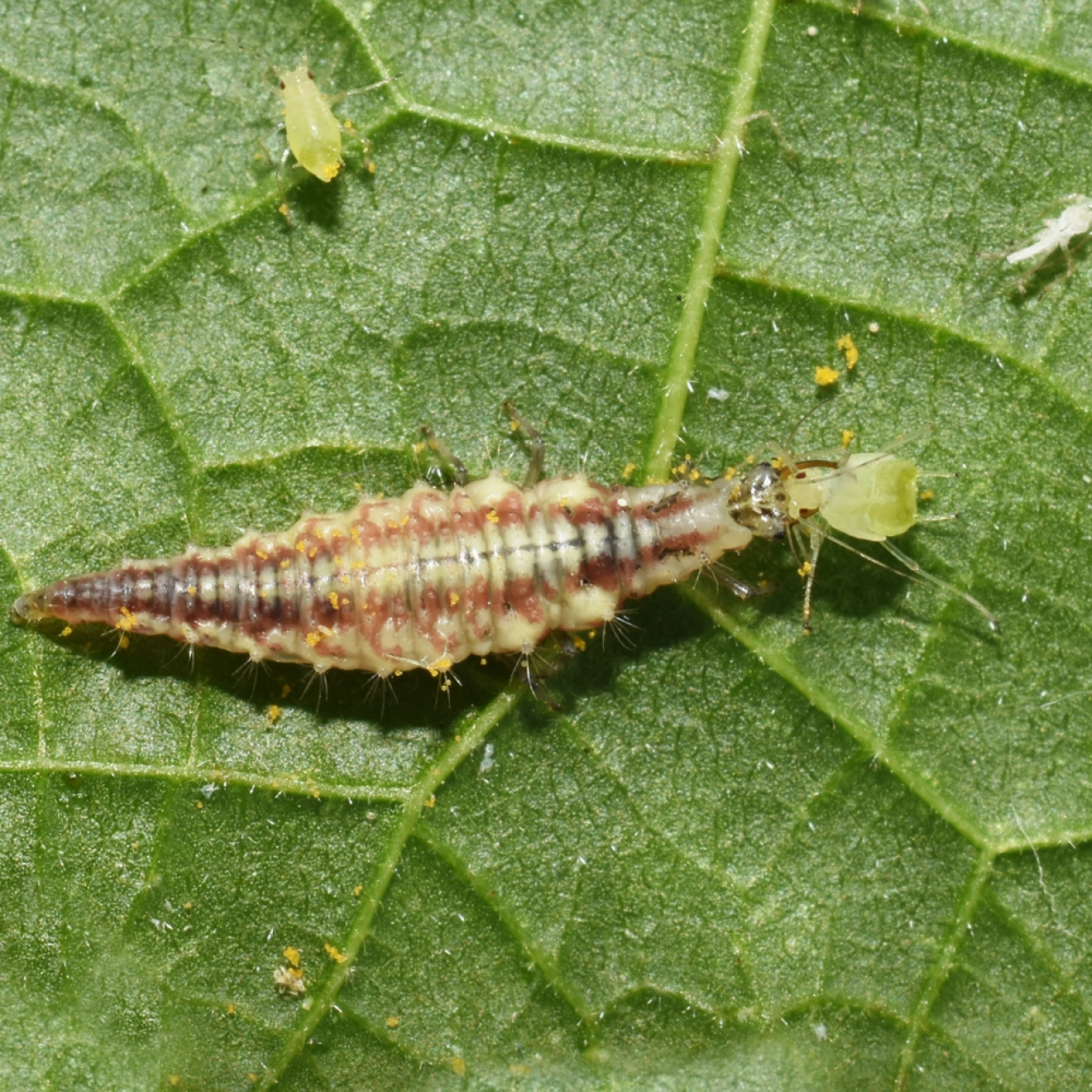
Biological controls are non-chemical treatments that rely on the natural enemies of pests. In the case of aphid control, the enemy is the ladybird larvae or lacewing larvae. Lacewing larvae may perform better in fluctuating temperatures or humidities.
Lacewing larvae will target both greenfly and blackfly and are suitable for organic production. The larvae of lacewing feed on the aphids, consuming up to 100 aphids each a day.
How Many Lacewing Larvae Do I Need
We sell aphid control lacewing larvae in packs that cover the following areas:
How to Apply Biological Aphid Control
Do not use sticky traps or pesticides near the larvae.
|
Pack Size
|
Dilution rate
|
Application instructions
|
|
100m2
|
1 pack covers 100m2
|
Open the bottle and shake thoroughly so that the larvae fall on the plants that need to be treated. Distribute evenly throughout the plant or plants and concentrate on the areas with the highest pest pressure. Apply early in the morning or evening.
|
|
10000m2
|
1 pack covers 10,000m2
|
Open the bottle and shake thoroughly so that the larvae fall on the plants that need to be treated. Distribute evenly throughout the plant or plants and concentrate on the areas with the highest pest pressure. Apply early in the morning or evening.
|